Article: The Hands that Painted


Article: The Hands that Painted
The Hands That Painted the World: Women,Memory, and the First Marks of Art
For decades, the handprints pressed onto Paleolithic cave walls were explained away with a familiar story: they must have belonged to men, or perhaps adolescent boys. A ritual for men, marking a rite of passage in the dark. It was and assumption made by HIStory, and it was wrong.
In 2013, anthropologist Dean Snow published an analysis of hand stencils from Upper Paleolithic cave sites in France and Spain. By studying hand size and finger-length ratios, he found that many of the measurable prints were most likely made by women. Suddenly, the old picture shifted. The first artists were not only men chasing bison across stone. Many of the hands reaching through time belonged to women.
I have visited the Paleolithic caves in Southern France; I have walked the Neolithic grounds at Çatalhöyük in Turkey. One of the world’s earliest settled communities, where the feminine presence seems woven into the very layers of earth. In both places, I felt the same thing, women were not passive figures at the edge of the story. They were central, wise, and powerful.
They were not simply “artists” in the modern sense. They were knowledge keepers, ritual makers, foragers, healers, mothers and grandmothers. As newer discoveries continue to challenge old assumptions, hunters too. Burials found with spear points and hunting tools remind us that prehistoric women’s lives were broader, more skilled, and more physically capable than the old textbooks allowed.
Then there were the elder women, the post-menopausal women whose value did not end with childbearing. Freed from pregnancy, they became some of humanity’s greatest evolutionary assets. Carrying memory, teaching survival, feeding children, tending fires, passing down plant knowledge, stories, warnings, songs. We exist, in no small part, because of them.
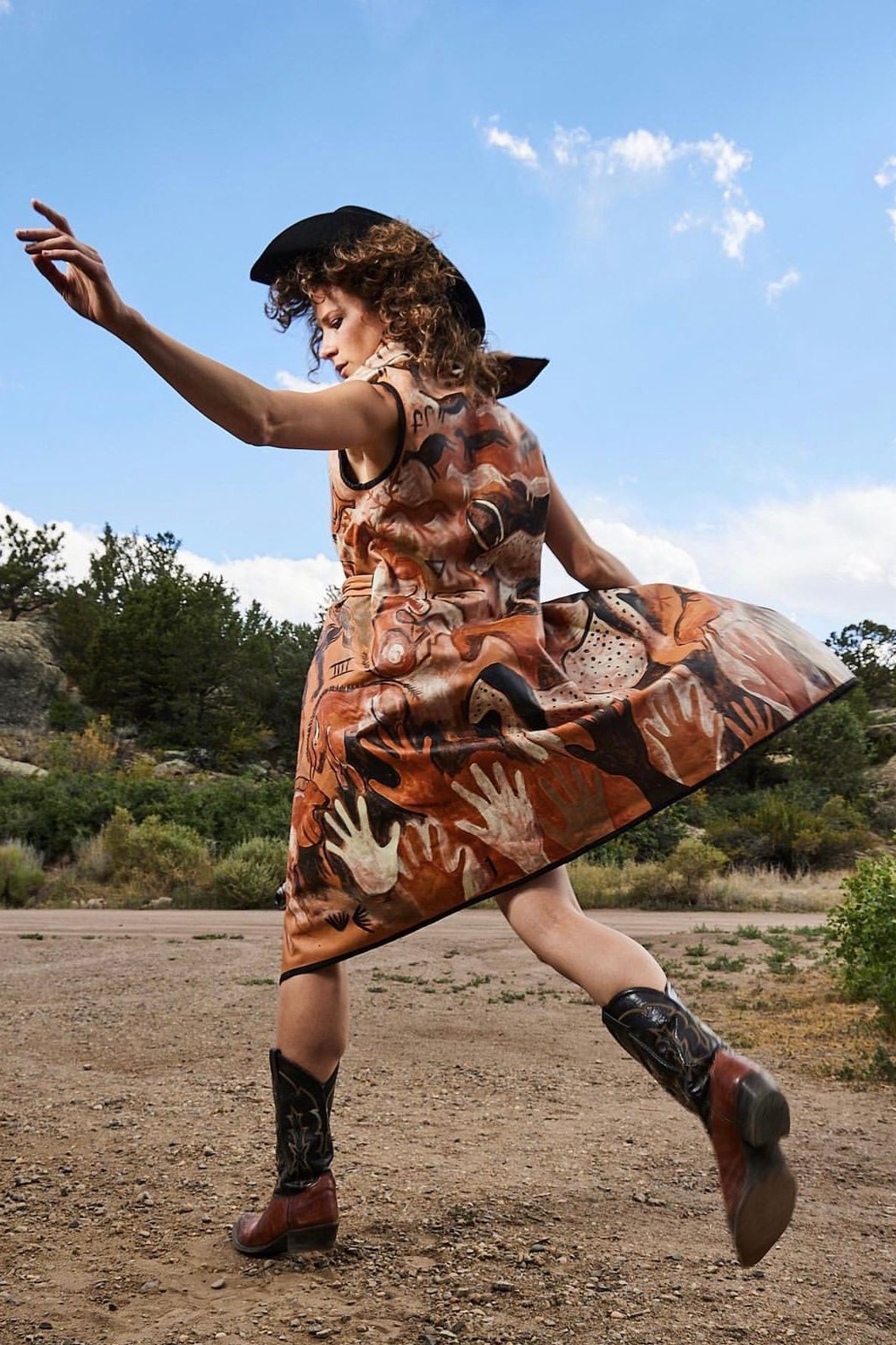
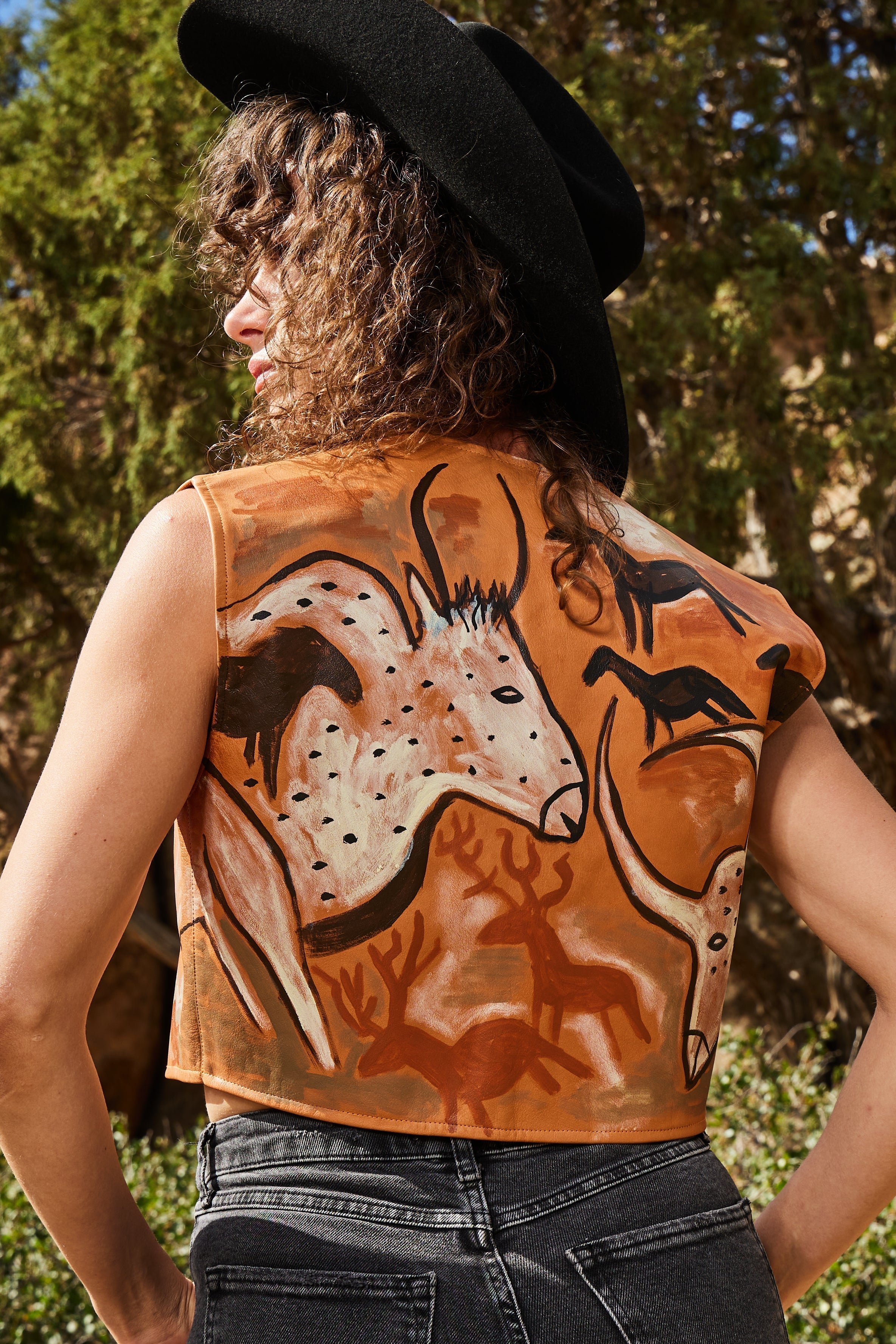
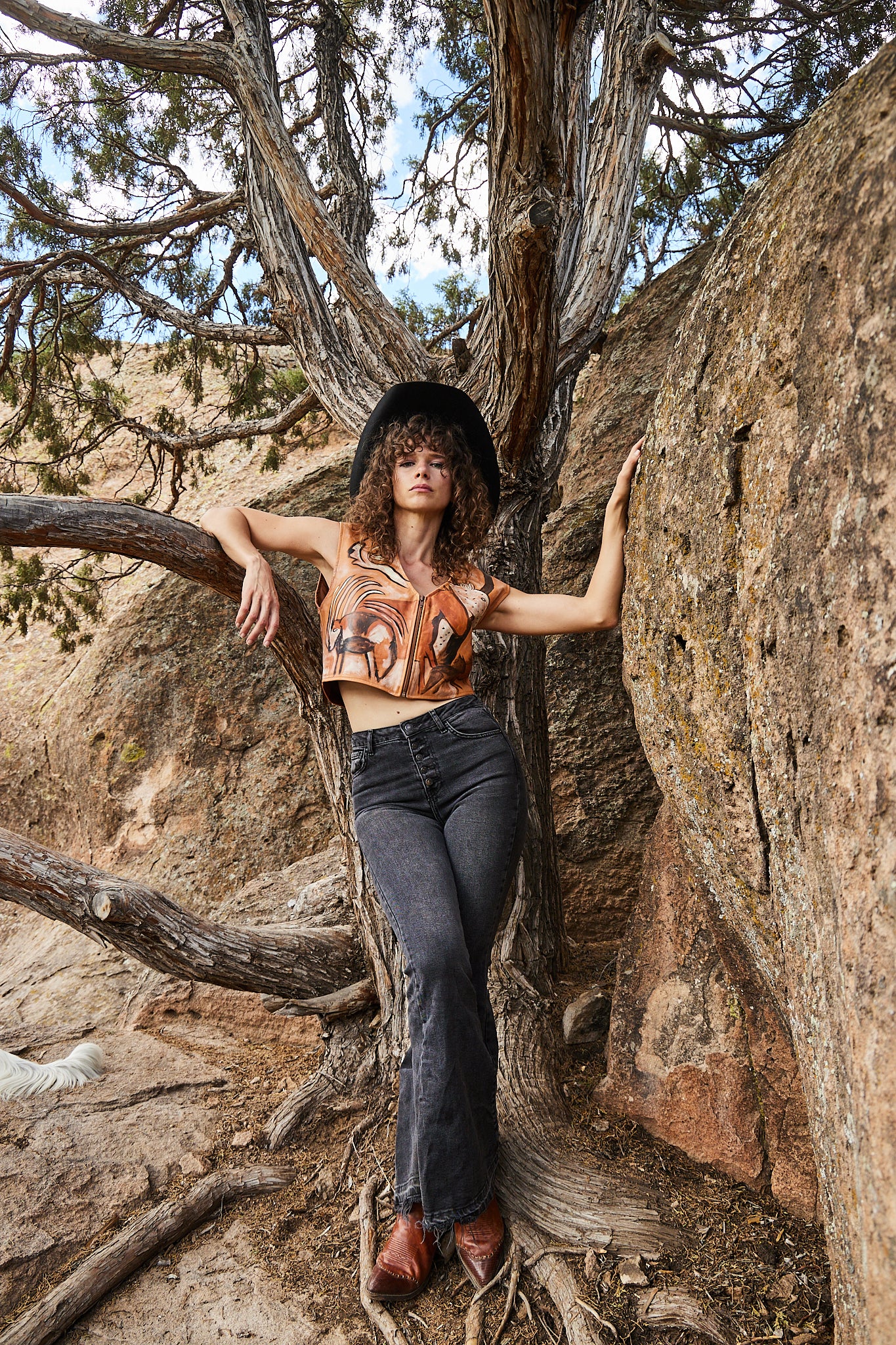
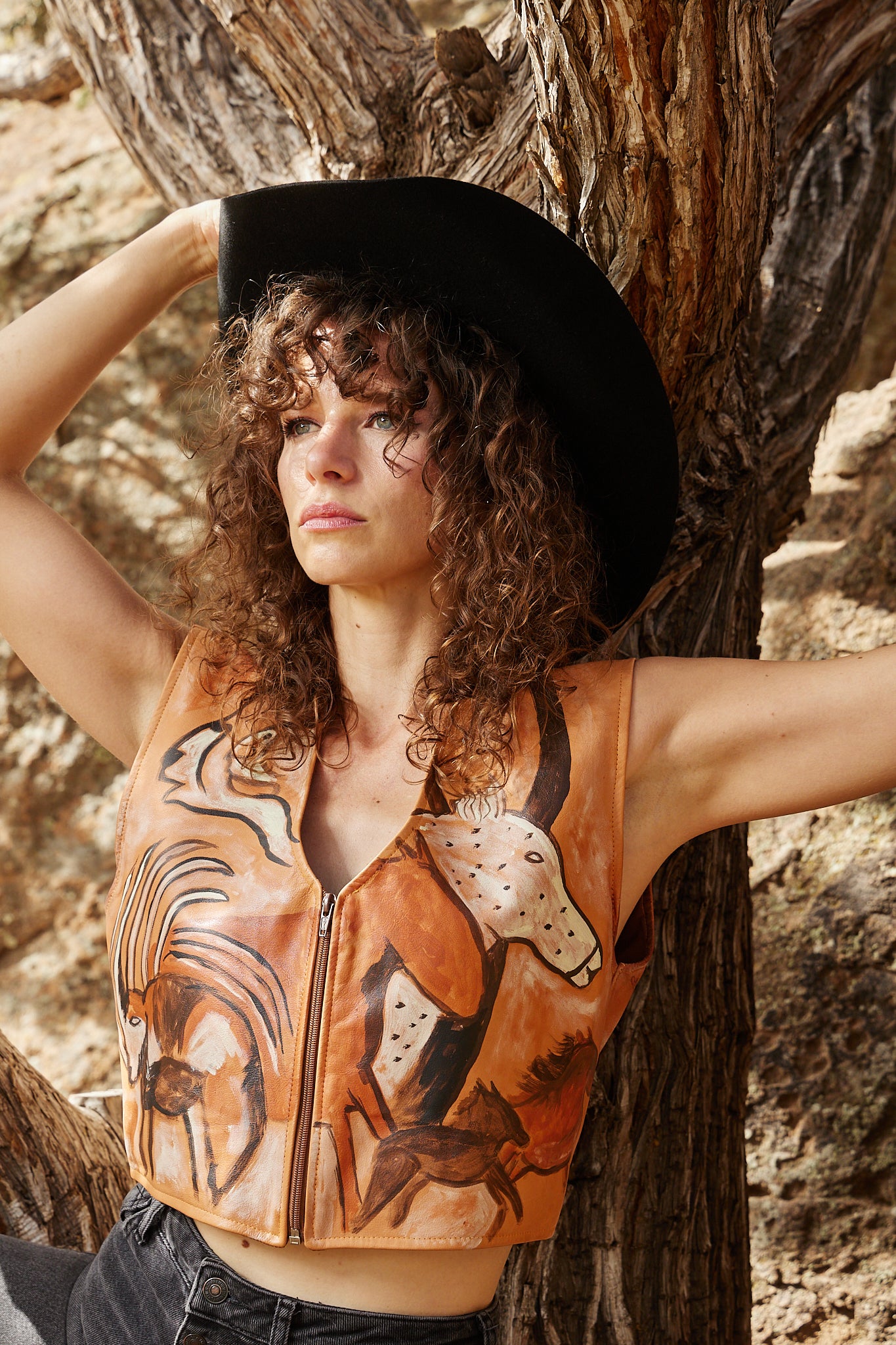
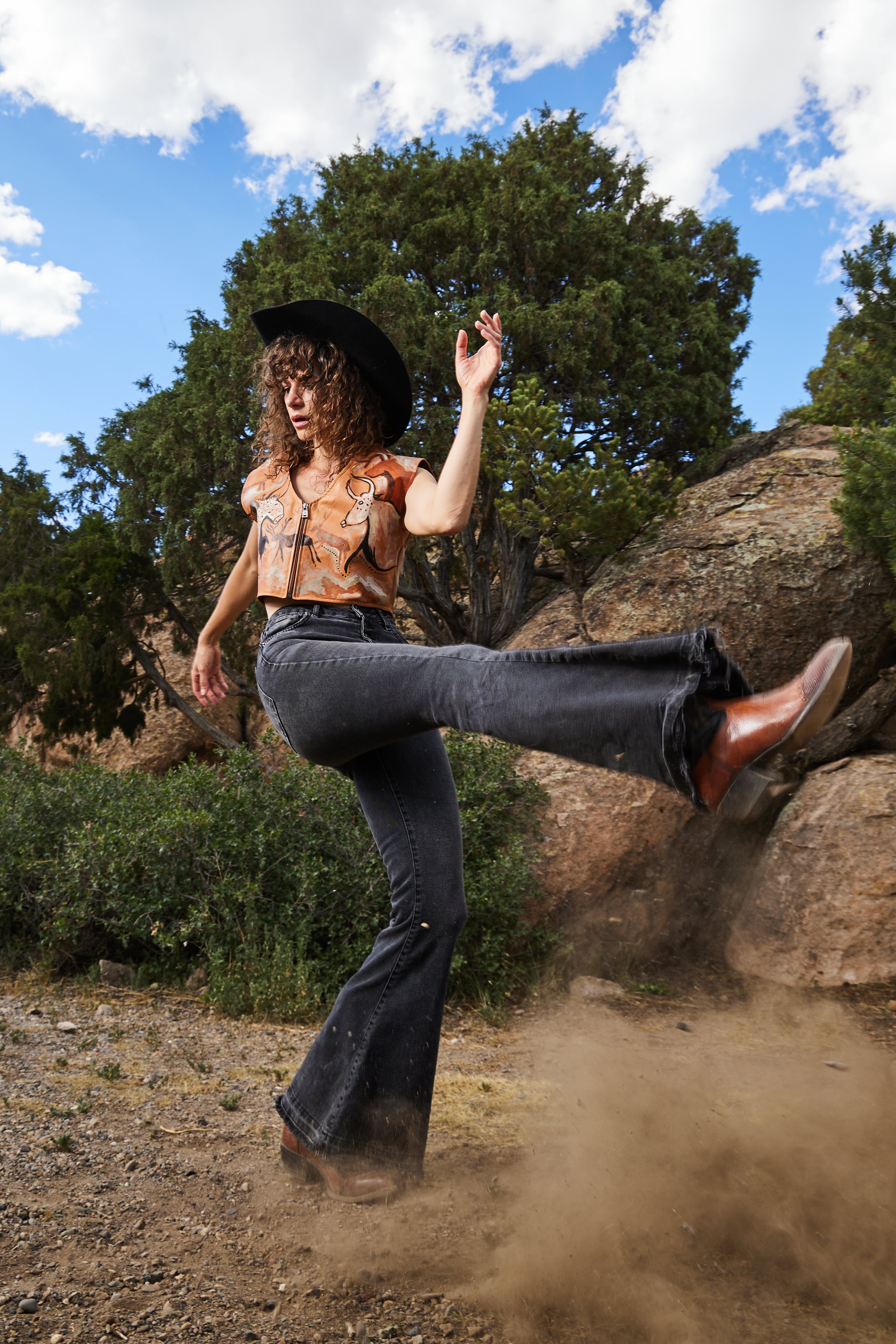
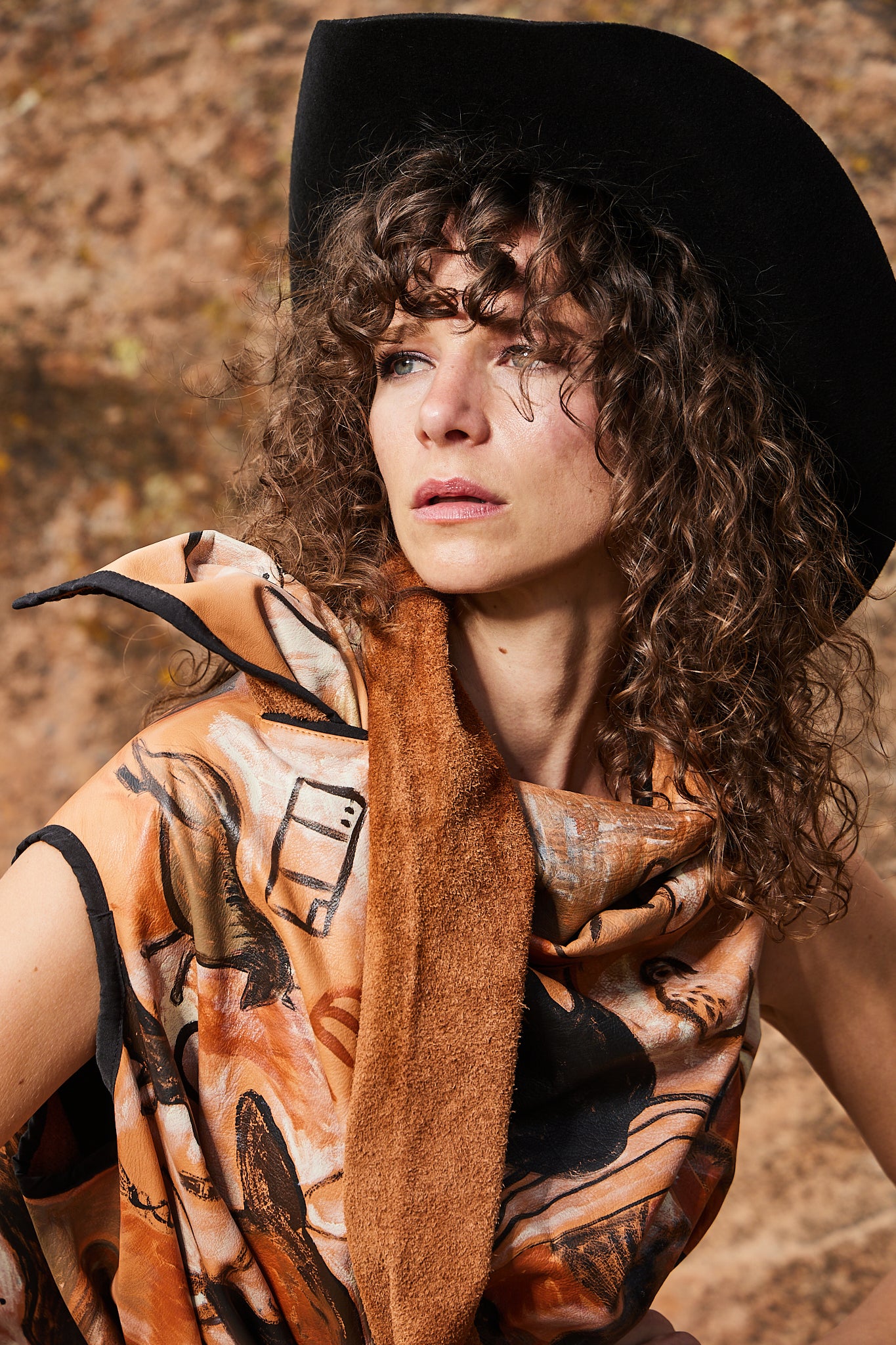
That lineage is what inspired the hand-painted leather vests in my collection. Each vest carries replicas of Paleolithic cave imagery from sites around the
world, painted by my own hand in conversation with that ancient tradition. When I paint, I think about the women before me, grinding pigment, choosing symbols, lifting a hand to stone, leaving a mark in the dark.
A handprint in ochre is not just decorative; it is a signature. A declaration across thousands of years, I was here.
These vests are my way of answering back.